The Importance & Process of Concept Art
Concept art is a vital step is the process of making something out of an idea. It is in essence the first required step for bring something from words, into a fleshed out product ready for the screen.
Why we believe Concept Art is the most important stage in game asset development
Concept art isn’t just about making things look cool. It’s about thinking clearly, communicating visually, and saving time, money, and sanity across the entire production pipeline. Whether we’re building original IPs or collaborating with global brands, strong concept art is the foundation everything else stands on, and it lets clients see a visual representation early in the process.
The Stages of a Concept: From Idea to Illustration
In professional game development, concept art isn’t a single step, it’s a progressive pipeline like any other part of the process. Each stage answers different questions and deliberately increases clarity while also reducing risk. Understanding these stages helps explain why concept art is structured the way it is and why skipping steps can create expensive problems later.
To understand more about why concept art is important, and why it shouldnt be avoided in the early stages, read below on the idea of a what we call "The Shotgun Approach".
The Shotgun Approach
A common theme we find is people with a great idea will come to us and ask us to make an illustration, or worse, a 3D Model, of something cool and captivating.
"We love your work and really want to work with your team. Wed love you to make a model of a super cool yeti boss! How do we start?"
Usually, our first response will be "Do you have any references, or concepts" and almost always, the answer is no. Sometimes, AI references will be supplied, but are so foreign to the games we work with that they simple don't or cant be translated well into production ready assets.
In this scenario, both the client and the studio can end up dissatisfied; not because the idea was bad, but because there wasn’t enough time or structure to properly explore what the idea could be. Without that exploration phase, decisions get locked in too early, and the final result rarely lives up to the original vision.
Concept art exists specifically to prevent this scenario. It gives ideas room to breathe before they’re forced into a final form.
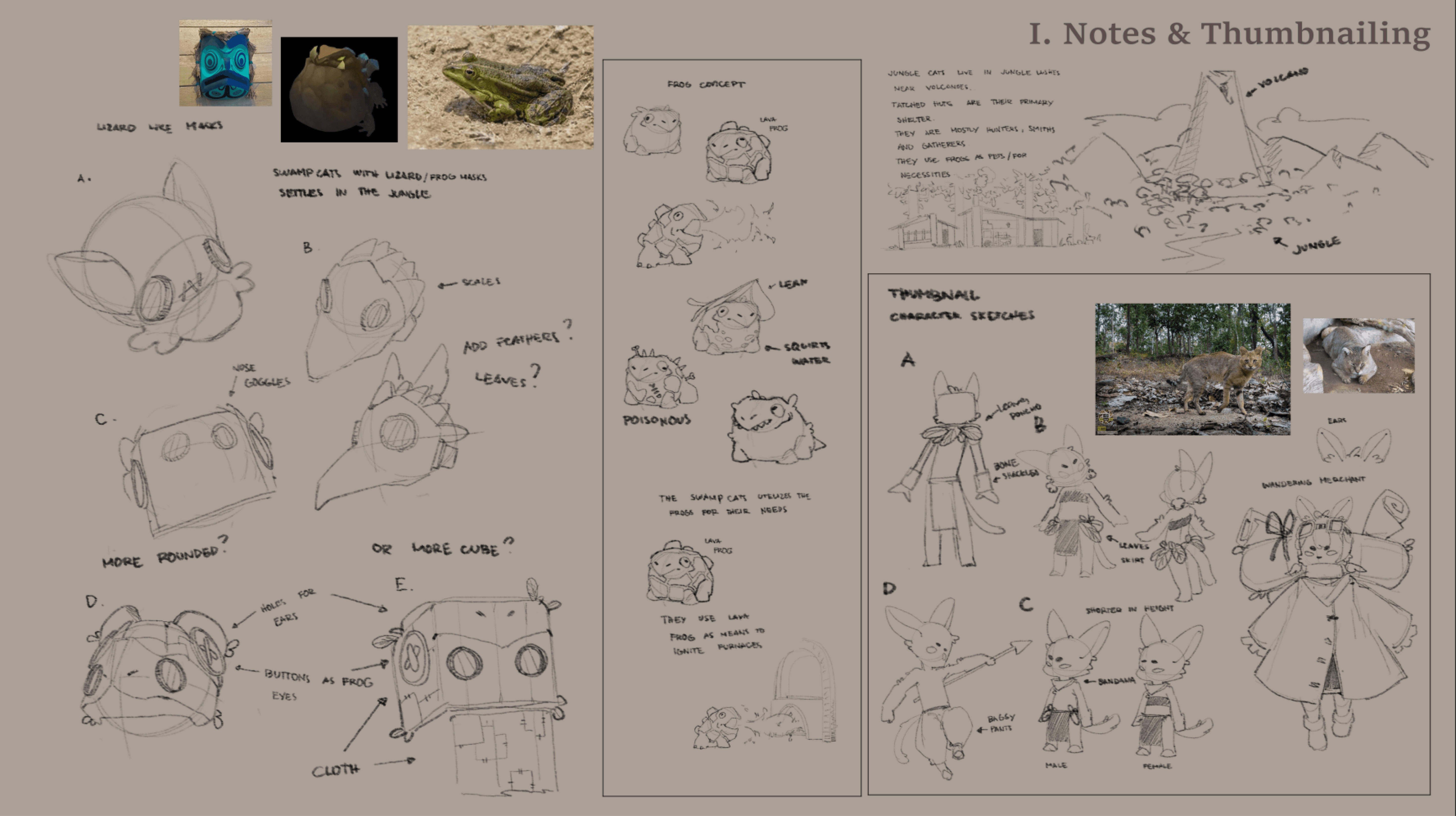
Ideation & Thumbnailing
This is the earliest and most flexible stage. Artists rapidly sketch silhouettes, shapes, and rough compositions while jotting down notes and questions.
At this point, the focus is on exploring ideas in multiple directions, identifying strong silhouettes, motifs, themes, drawing from real world inspiration, and identifying potential issues in ideation early.
Nothing here is final and that’s the point.
Quantity of Quality. Speed over Polish
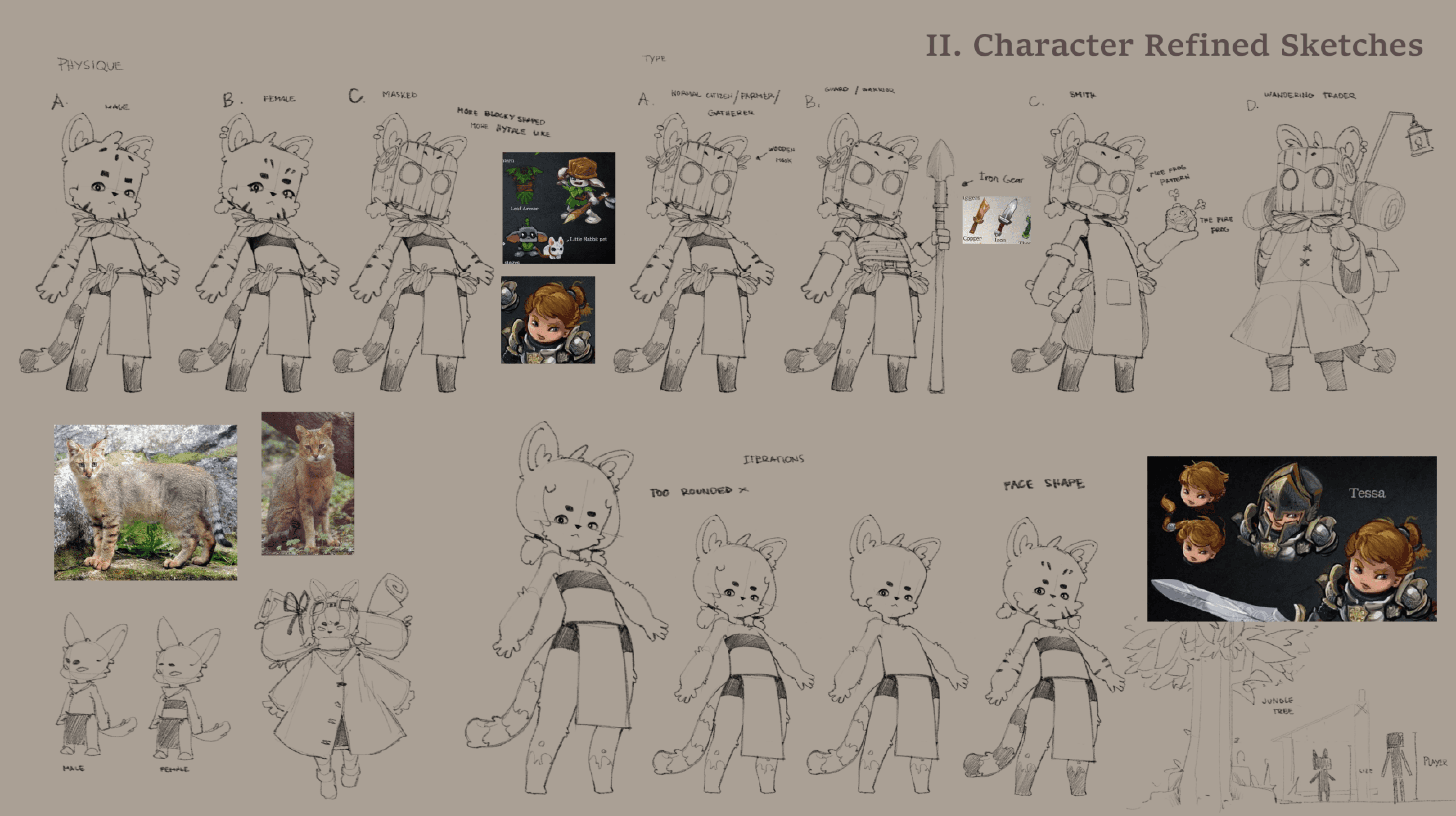
Refined Sketches
Once a direction is approved, sketches are refined to better define anatomy, proportions, gear, and personality. Line work becomes clearer, but the design is still adjustable.
This stage helps answer:
Does the character read clearly at a glance?
Is the silhouette distinct from others?
Does the design match the intended tone and audience?
Changes are still relatively inexpensive at this stage, but far more deliberate. This is also what we consider the minimum viable point for a new character design, and where we’re confident moving forward into 3D production if budget is a concern.
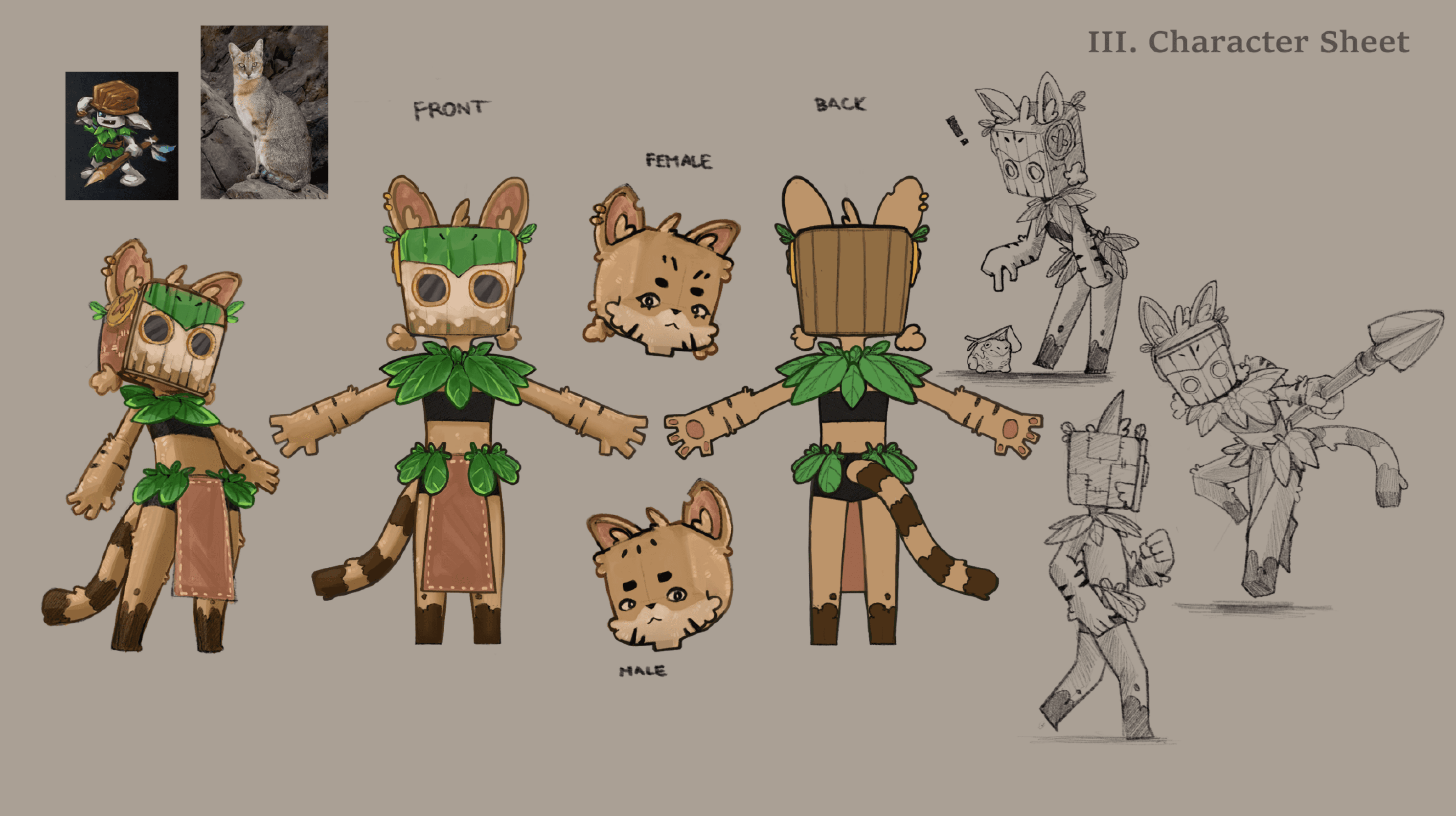
Design Sheets & Turnarounds
Now the concept shifts from idea to blueprint. Base colors, turnarounds, callouts, and notes are added to ensure the design can be taken from a conceptualised idea, into its intended form.
This stage ideally defines:
Front, side, and back views
Proportions that must remain consistent
Functional elements (armor splits, joints, layers)
Intended color choices
This is where concept art becomes production-ready documentation and changes become more expensive to make.
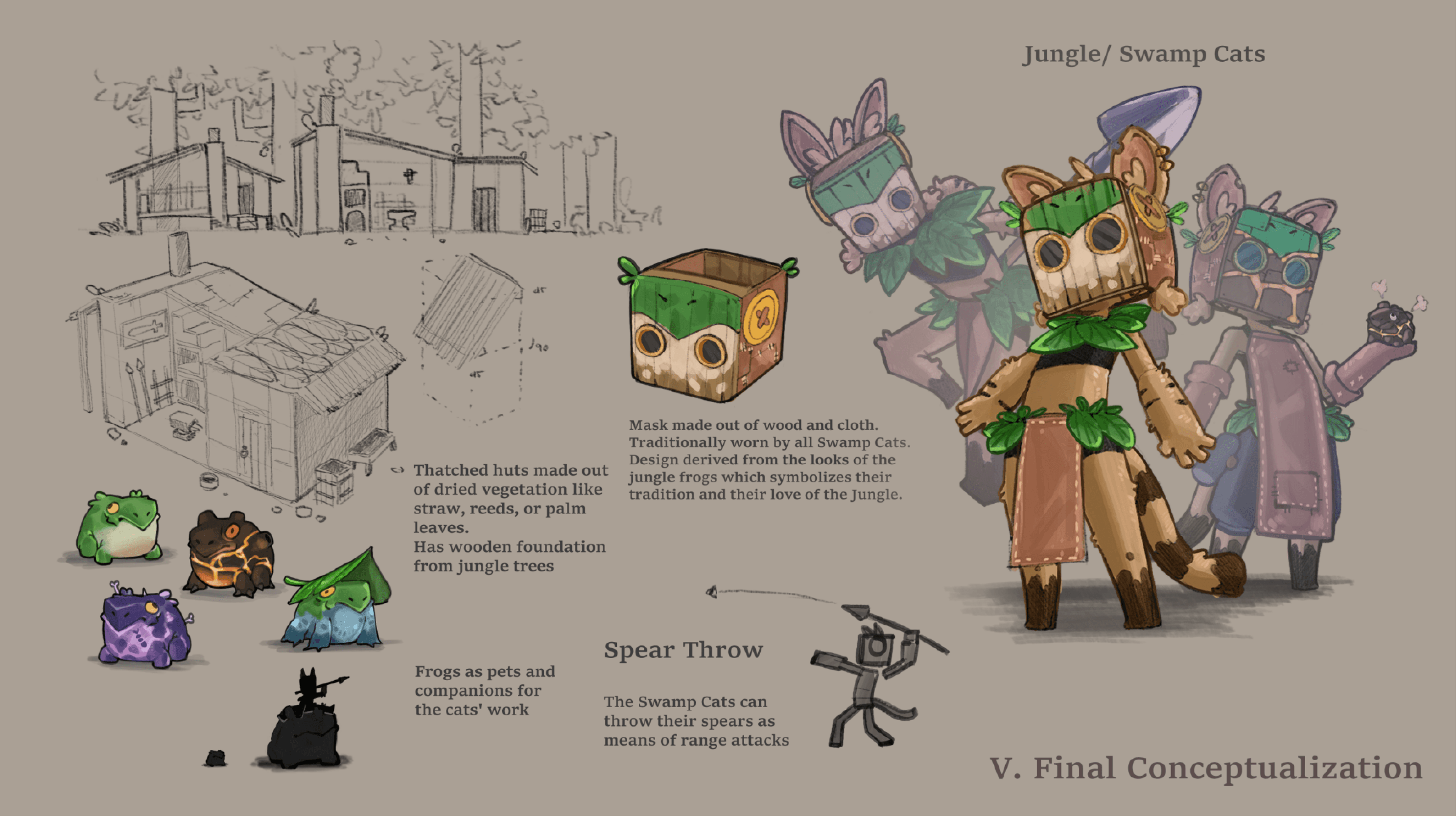
Final Concept
The final stage delivers a polished illustration that represents the intended final look of the asset, for all usable mediums, from Illustrations to 3D Assets and Marketing Material.
This artwork:
Acts as the main reference for production teams
Aligns all departments visually
Reduces subjective interpretation
Provides additional context
While it may look like “finished art,” its primary role is still on clarity and alignment.
Design with Intention, Build with Confidence
Great games aren’t built by jumping straight to the finish line. They’re built by making the right decisions at the right time.
Concept art gives ideas structure. It creates alignment between teams, sets clear expectations, and removes ambiguity before it becomes expensive. More importantly, it allows creativity to thrive in a space where experimentation is encouraged and mistakes are cheap.
At Embody Games, we don’t see concept art as an optional step or a “nice to have.” We see it as the point where a project earns the right to move into production. When the foundation is solid, everything that follows (modeling, animation, VFX, implementation) moves faster, costs less, and delivers better results with an aligned vision.
If you want a process that respects your budget, your timeline, and your vision, start where the industry starts: with concept art done properly.